Blog – Our Heritage, Your Heritage

John Mann’s Pilgrim 400 debate in Parliament

Bassetlaw MP John Mann recently asked questions in Parliament about the plans for the 400th Anniversary of the Mayflower’s voyage, coming up in 2020.

You can read the debate in Hansard or watch the debate on parliamentlive.tv.

Mr Mann outlined the history of the Pilgrims, and their roots in Bassetlaw:

“At first glance, nonconformity and its influence on democracy are a series of extraordinary coincidences based in the beautiful setting of rural Bassetlaw, and they are all linked by geography, message and history. The modern history of our great ally and special partner, the United States of America, comes from a tiny group of men and women who, in the autumn of 1620, arrived on board the Mayflower at Cape Cod in Massachusetts. They were a group of religious and political nonconformists who risked their lives, and at times lost their liberty, in order to establish the basis and values of the society they wanted. It was a society that, through the Mayflower compact—which was the basis of that first settlement on the east coast of America—created both the foundations for the constitution of the United States and the model for parliamentary democracy.”

Oliver Colvile, Conservative MP for Plymouth, Sutton and Devonport, acknowledging Plymouth’s role in the story of the Mayflower, invited Mr Mann to join with him and co-chair an all-party parliamentary group to recognise the 400th anniversary.

Mr Mann positively embraced the invitation, hoping that a:

“Bassetlaw-Plymouth amalgam cross-party group would be a powerful way to spread the message of the values and principles of the Mayflower Pilgrims.”

In response to Mr Mann’s statements about Bassetlaw, David Evennett, the Parliamentary Under-Secretary of State for Culture, Media and Sport, stated that:

“It is only right that all parts of the United Kingdom that were involved in that momentous occasion can profit from the renewed interest that the citizens of the USA will have in visiting the UK as part of the 400th anniversary commemorations in 2020. This matters not just for the constituencies involved, but for tourism and the economic benefits brought by those tourists from America and other parts of the world, because we have a great story to tell. American tourists spent nearly £3 billion in this country in 2014.

The Plymouth area has received financial support from the Government, with £35,000 announced to upgrade facilities at the Mayflower museum. However, I would like to allay any fears that the people of Bassetlaw might have that all Mayflower-related financial support is going to Plymouth and will not be distributed across the country: £500,000 worth of support was announced in the autumn statement 2015 by my right hon. Friend the Chancellor, as we heard, for Mayflower-related celebrations across the country. VisitEngland is in the process of allocating that sum and will involve in its work a number of areas across the nation, not just the city of Plymouth.”

You can read the full debate from 9 March 2016, including Mr Mann’s history of Bassetlaw, in Hansard.

Helwys commemoration event highlights the need for religious tolerance as much today as in 1616

Religious intolerance and state oppression pose real dangers to personal freedom. And some 77% of the world’s population live under government restrictions on their beliefs.

DSCN2119

Cllr Jo White, Baroness Berridge, Rev Tony Peck and Adrian Gray

These were among the key messages at an event at The Well in Retford last week (Saturday 12 March), commemorating the 400th anniversary of the death of local Separatist, Thomas Helwys, who first advocated universal religious freedom.

Addressing an audience from across the UK, Baroness Elizabeth Berridge, member of the House of Lords and Co-Chair of the All-Party Group on International Freedom of Religion and Belief, outlined examples from history – and today – of religious intolerance and state oppression.

She cited the reigns of Queen Mary and Queen Elizabeth I when, to be a loyal subject to the Crown, religious allegiance to Catholicism and Protestantism respectively was required, and the penalty for failure to conform was severe.

More recent history from the Balkan conflict showed the aligning of loyalty to the Serbian state with belief in the Serbian Orthodox Church. The Russian state and the Russian Orthodox Church are forming the same relationship with Russian identity.

In Burma, the Buddhist majority is suspicious of Christian and Muslim minorities, translating into persecution. Iran and Saudi Arabia both practice similar forms of theocracy from opposite sides of Islam. The most extreme current example is that of the so-called Islamic State where religious persecution is being used to attempt to impose a form of government.

Baroness Berridge went on to say that the Pew Research Centre (US)* had estimated that 77% of the world’s population live under governmental restrictions on their beliefs. She explained that an all- party group in Parliament with support from both houses and all parties was trying to raise the profile of the need to stand together to defend the rights of religious freedom for all.

She ended by highlighting that we are today benefitting from the fruits of the sacrifice of Thomas Helwys, who died for his belief in universal religious freedom – for all faiths, and none.

Rev Tony Peck
Rev Tony Peck

Rev Tony Peck, General Secretary of the European Baptist Federation, described the life of Thomas Helwys, including his time spent in Gainsborough with John Smyth, from Sturton. They left for Amsterdam in 1608 and established a Baptist principle of belief in A Declaration of Faith of English People Remaining at Amsterdam in Holland (1611). Helwys returned to England and set up the first English Baptist Church at Spitalfields, London.

He then published A Short Declaration of the Mystery of Iniquity, containing the first English language plea for universal religious freedom – for all faiths, and none. He denied the King’s right to impose laws requiring religious conformity and the King responded by imprisoning him in Newgate prison, where he died in around 1616.

Deputy Leader of Bassetlaw District Council and Portfolio Lead for Regeneration, Cllr Jo White, opened the event to commemorate the 400th anniversary of the death of Thomas Helwys. She acknowledged the importance of the area around Retford where the founders of the Baptist, Quaker and Methodist denominations had originated, together with leaders of the Mayflower Pilgrims.

Bassetlaw District Council is proud of this unique aspect of our heritage, she said, and has created an annual Festival of Stories leading up to 2020, the 400th anniversary of the Mayflower Pilgrims reaching America. This weekend (Friday 11 and Saturday 12 March) was the start of the Rebels and Religion Festival, with the first national Christian Heritage Conference held at The Well on Friday, which was a great success. She also looked forward to this becoming an annual event.

Local historian, Adrian Gray’s book was launched at this event, entitled From Here We Changed the World. Cllr White commented that this is “a bold statement, but it is a fact, and one we are very proud of”. She thanked people for attending and encouraged everyone to “work together to make positive changes for our future and the future of our children”.

A Release International representative and an Open Doors representative were interviewed by Richard Warren (Assistant Pastor, The Well). They confirmed that 200 million Christians around the world today suffer some form of persecution. The Christian church has become a target for people wishing to express their disapproval of the actions of Western democracies, especially where Christian peoples form minority groups in other cultures.

The event was brought to a close by Adrian Gray. Forty-five visitors joined him for a guided tour of churches relevant to the Helwys story in Askham, Sturton, Saundby and Glentworth; and Gainsborough Old Hall.

Music was provided during the event by Dan Bailey and Lynn Clapperton.

*The Pew Research Centre (US) Latest Trends in Religious Restrictions and Hostilities:

“Looking at the overall level of restrictions – whether resulting from government policies or from hostile acts by private individuals, organizations and social groups – the study finds that restrictions on religion were high or very high in 39% of countries. Because some of these countries (like China and India) are very populous, about 5.5 billion people (77% of the world’s population) were living in countries with a high or very high overall level of restrictions on religion in 2013, up from 76% in 2012 and 68% as of 2007.”


National Conference established in Retford

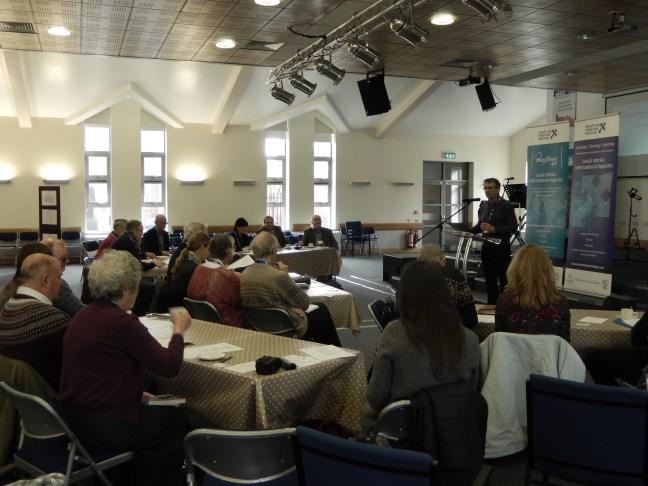
The first national Christian Heritage Conference took place at The Well, in Retford, on Friday 11th March 2016. This marked the start of an annual event, aimed at attracting national and international delegates, with a wide range of interests and approaches.

Adrian Gray addressing the conference

Retford, with its central positioning within the UK, its rich heritage, with national and world impact, and its excellent transport links, made it a prime location to host the conference.

Among the key findings were that non-Christian tourists, as well as Christian visitors, want to visit Christian Heritage sites, and the accessibility of well-maintained clean toilets is critically important for successful tourist locations.

Twenty-seven delegates from around the UK engaged enthusiastically at the conference, which enabled the sharing of information between organisations with a common purpose, but a range of approaches, focuses and backgrounds. Feedback was very positive with delegates looking forward to working together and returning to next year’s conference in Retford.

The conference was opened by local historian, Adrian Gray, who welcomed delegates from Bedfordshire, Buckinghamshire, Cambridgeshire, Cheshire, Cornwall, Edinburgh, Lincolnshire, London, Nottinghamshire and Yorkshire.

Adrian outlined the rich and varied Christian Heritage to be found within approximately 30 miles of Retford, including the leaders of the Mayflower Pilgrims and the Separatist movement, the founders of the Baptist, Congregational and Methodist Churches, the Salvation Army, and the first Quaker martyr.

Each delegate shared information about their organisation, with some fascinating insights:

  • William Booth, Salvation Army founder, was once apprenticed to a pawnbroker
  • mystery underground caverns of Edinburgh – origins unknown
  • Barnsley – Hudson-Taylor heritage trail attracts Chinese tourists
  • museum curators who used to live in, make breakfast, and change the beds
  • US choir touring the origin locations of their favourite hymns
  • Koreans who papered their houses with pages of the Bible

Delegates agreed that there is a rapidly growing interest in Christian heritage, as quality tourism, with educational elements, delivered in an accessible and enjoyable way. The experience, however, has to be excellent, requiring high standards of training, organisation and motivation.

The area in and around Bassetlaw, North Nottinghamshire has a range of engaging stories, attractive to tourists across a number of cultural and religious traditions. Combination themed tours provide the potential for development into attractive packages and opportunities for tourist sites/areas to work together.

The Christian Heritage Conference was organised by Pilgrims & Prophets, and Bassetlaw Christian Heritage.

Delegate organisations that attended the conference included:

Although a number of organisations are named “Christian Heritage”, they are independent; they pursue individual objectives, and there is no link between them.


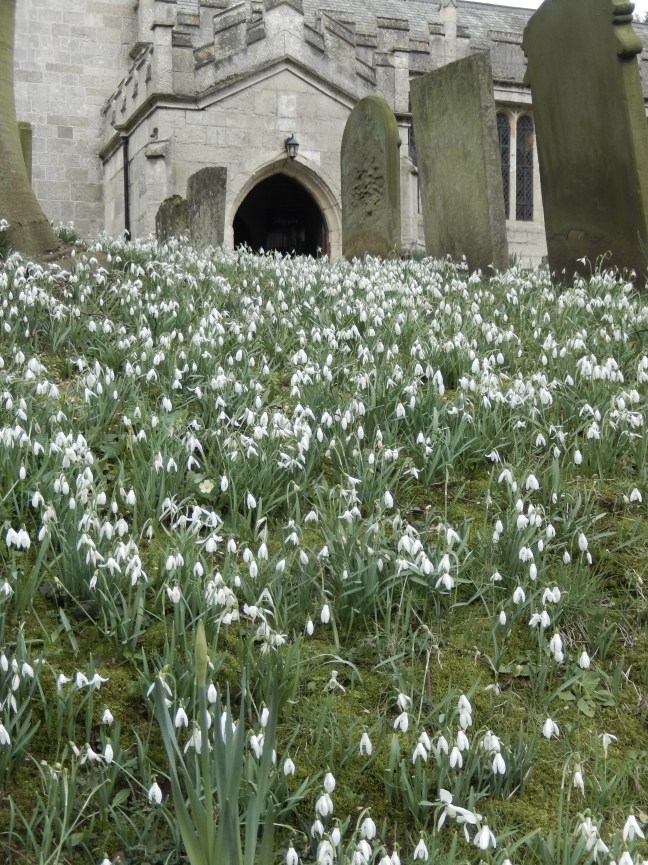
Snowdrops at Babworth

Babworth ‘Pilgrims’ Church holds successful Snowdrops Weekend

Known as “the Church in the Woodland”, All Saints’ Parish Church in Babworth provided the ideal setting for nature to put on a truly magnificent display of snowdrops.

All Saints’ Parish Church, Babworth, with snowdrops

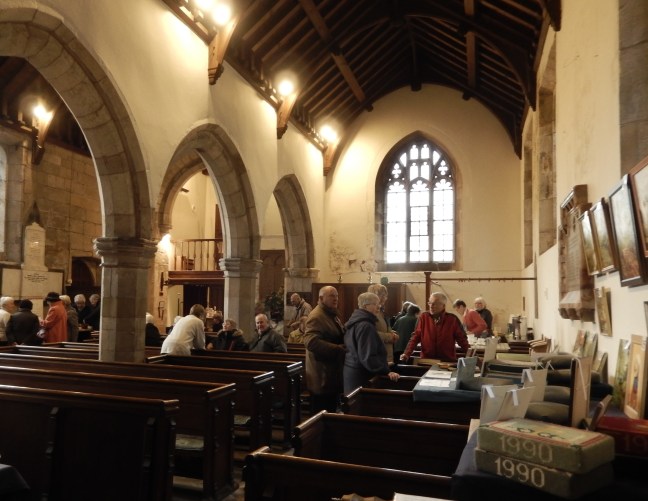
Around 600 people visited the church on Saturday 13th and Sunday 14th February to walk the Snowdrop Trail and enjoy the homemade refreshments on sale in the church. The guests were also treated to a wide range of paintings by talented local artist, Gerry Fruin. Part of the successful ‘Illuminate 400 – Retford 2015’, Mayflower Pilgrims exhibition was on show, as well as original copies of the notebooks of Rev. Edmund Jessup. He was Rector of All Saints’ from 1950 to 1984, and also honorary chaplain to the forces and chaplain of Ranby Prison: he did much to revive the American connection with Babworth.  There were also many architectural wonders to see, including stained glass windows by Kempe, Eginton, and Wailes; and furniture by “Mousey” Thompson.

Interior of All Saints’ showing local artist Gerry Fruin and visitors on the weekend of 13/14 February 2016

Originally a Norman church, All Saints’ is best known for its role in the Separatist Movement of the 17th century which resulted in the Mayflower Pilgrims’ historic journey to America. Richard Clifton, Rector of All Saints’ then, was the preacher that William Bradford, from Austerfield, and William Brewster, from Scrooby, travelled for miles along the Pilgrim Way to hear preach. Clifton was a central character in the Separatist Movement, although not travelling to America himself, he inspired Bradford and Brewster, who ultimately became the Governor and Senior Elder of Plymouth Colony respectively.

Gerry Fruin and Bassetlaw Christian Heritage will be returning to All Saints’ Babworth between 28th and 30th May as part of the church’s commemoration of the 400th anniversary of the death of Richard Clifton, and also as part of the Retford Arts Festival.

Thomas Helwys: religious pioneer from Bassetlaw

A special event will be held in March to commemorate the 400th Anniversary of the death of Thomas Helwys. Helwys was the founder of the Baptist denomination and has become known as a pioneer of religious liberty for all.

The event will be hosted by The Well in Retford at 10.30am on 12th March 2016.

Who was Thomas Helwys?

Helwys was from a North Nottinghamshire family and was probably born at Askham, near Retford. The family held lands there, at Saundby, and in Lincolnshire. His uncle Gervase was governor of the Tower of London but was executed after an important prisoner was poisoned.

Thomas’s father moved the family to Broxtowe Hall where he also brought up his own family; he became a friend of the puritan and separatist, John Smyth, and helped finance the escape of the Pilgrim Separatists to the Netherlands in 1608.

There, Smyth and Helwys became Baptists, but Helwys felt called by God to return to England to start an illegal Baptist church – the first congregation of the Baptist denomination.

He also wrote the first book in English to argue that all people should have freedom of religion, for which he was imprisoned by King James and was never released. The message of freedom was taken up by other Baptists, including John Murton of Gainsborough, and taken to America by Roger Williams who was married to Mary Bernard, daughter of a friend of Helwys, who had been vicar of Worksop.

Thomas Helwys is of global significance because:

  • Helwys was the first Englishman to explicitly state that people of any religion – Christian, Jew or Muslim – should be free to exercise their faith without government interference; the importance of this view has increased greatly in recent times
  • He founded the English-speaking Baptist denomination – the largest single Christian group in the USA and with nearly 50 million Baptists worldwide
  • In an age dominated by strict Calvinists, he preached that God’s love was available for any person who wanted it.

How are we marking 400 years since his death?

There will be two keynote speakers, a short film about Thomas Helwys, some music, and a chance to talk with representatives of groups campaigning for religious liberty today. A buffet lunch will be followed by an optional tour of local churches relevant to the Helwys story.

This free event is being held at The Well, also known as Retford Baptist Church. This is the nearest Baptist church to Helwys’s most likely place of birth and has been part of his denomination since at least 1691, when Baptist churches became legal. We are very grateful to the Well for their hospitality.

The commemoration event will include two keynote speakers:

BARONESS ELIZABETH BERRIDGE:

Elizabeth became Baroness Berridge of the Vale of Catmose on 20th January 2011 and is a working peer. She sits on the Select Committee for Social Mobility and the Ecclesiastical Committee, is a member of the London Policing Ethics Panel and the Co-Chair of the All Party Group on International Freedom of Religion and Belief.

Since 2012, Elizabeth has become a key voice in the deepening worldwide discussion on freedom of religion and belief as defined in Article 18 of the Universal Declaration of Human Rights.

2014 saw the beginning of a partnership between the British All Party Parliamentary Group and United States Commission on International Religious Freedom, which resulted in the launch of an International Panel of Parliamentarians (from 18 different countries), of which Elizabeth is Chair, whose pledge is to work together to end belief- based persecution worldwide.

In addition to her Parliamentary work, Elizabeth is a trustee of the think tank, British Future, which focuses on identity, integration, migration and opportunity. She is a member of the advisory council of the Foundation for Relief and Reconciliation in the Middle East and an active member of her local Church, St. Michaels, Chester Square.

She has lived in Trinidad and Tobago and Ghana and continues a special friendship with British African Caribbean and British African Church leaders.

Elizabeth will explain the importance of Helwys in the World today.

REV TONY PECK:

Tony is General Secretary of the European Baptist Federation (EBF) and also an ordained Baptist minister. He has spoken widely on religious freedom and wrote a well-received report on the history of religious freedom in central Europe.

Following his upbringing in Scotland he studied music and education at the Guildhall School of Music and the University of London, and theology at the University of Oxford. He was ordained as a Baptist minister in 1984.

He has worked as the pastor of a local church, a regional minister and a Baptist college teacher, before taking up his present post in 2004. In his work for the EBF he has travelled widely in Europe, Central Asia and the Middle East visiting the 57 member bodies of the EBF.

His main academic research interest is in the concept of religious freedom, especially as pioneered by the English Baptists in the 17th century, as well as its contemporary role in the modern concept of human rights. He has written on this theme, as well as on aspects of Baptist identity and contemporary missiology.

Tony has participated in several ecumenical dialogues, most recently between the Baptist World Alliance and the Roman Catholic Church. He is a past member of the Conference of European Churches Commission on Church and Society and its Human Rights Group.

Tony will introduce us to the life of Helwys.

Illuminate 400 – Retford 2015

Join us for ‘Illuminate 400: Retford 2015‘, a pop-up exhibition in Retford Town Hall, Nottinghamshire, on Thanksgiving Day, Thursday 26 November 2015, 10am-4pm.

The exhibition will then move to The Crossing in Worksop for one day on Saturday 28 November 2015.

This event launches Bassetlaw’s countdown to the 400th anniversary of the sailing of the Mayflower in 2020, and begins to tell the story of the Mayflower Pilgrims and how the area is connected to the story.

Heritage exhibition at Babworth

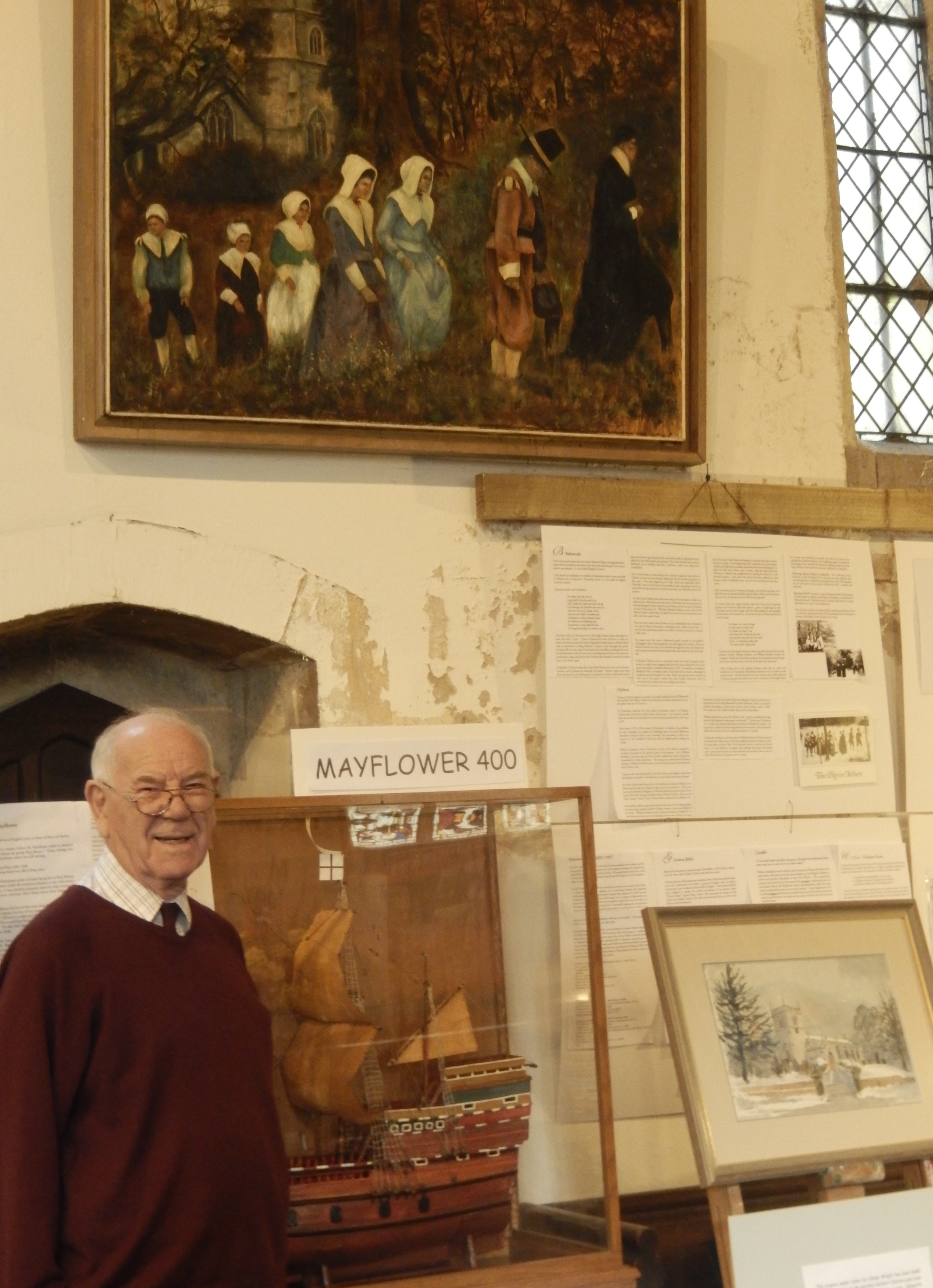
Enthusiastic members of All Saints’ Church in Babworth have recently put on a heritage exhibition to add to their annual harvest festival celebrations. The Church was filled with displays on a series of histories featuring prominent anniversaries.

The displays included a look at the Magna Carta with a complete translation, which was signed in 1215 and is being celebrated widely this year, 800 years later. It’s now 200 years since the famous Battle of Waterloo, in 1815, which was also featured. The other prominent anniversary that was recognized is the forthcoming 2020 400th anniversary of the voyage of the Mayflower to America – a story which this church has intimate links to. Richard Clyfton, one time rector of Babworth, has been credited with inspiring a small community of families who were to later travel on that famous ship.

The Church also had a display relating to the Salvation Army and their local links and foundation, as well as their own work. All this was set amongst harvest festival offerings and floral displays. Beautiful weather and the promise of tea and cakes in this rural church in its wooded surroundings made this a visit not to be missed.

Babworth exhibition Sep15 (2)